

Joining online casinos takes a few checks before the first deposit, and knowing them in advance makes sign-up quick for Canadian players. One welcome fact sits near the top of the list: if you play for fun, your winnings are generally not taxed in Canada.
The rest is practical. Sites want proof of your age, your identity and your location, and each province draws those lines a little differently. Use the list below as your starting point.
Six Points to Settle Before Signing Up
Run through these points before you open any account. Each one is explained further down.
- You meet the minimum age for the province you are in.
- You are physically inside the province whose site you are joining.
- Your photo ID matches the name you plan to register with.
- Your bank account or card is in that same name.
- The site is approved in your province, not just available there.
- You have set a monthly budget you can afford to lose.
Ages Differ From One Province to the Next
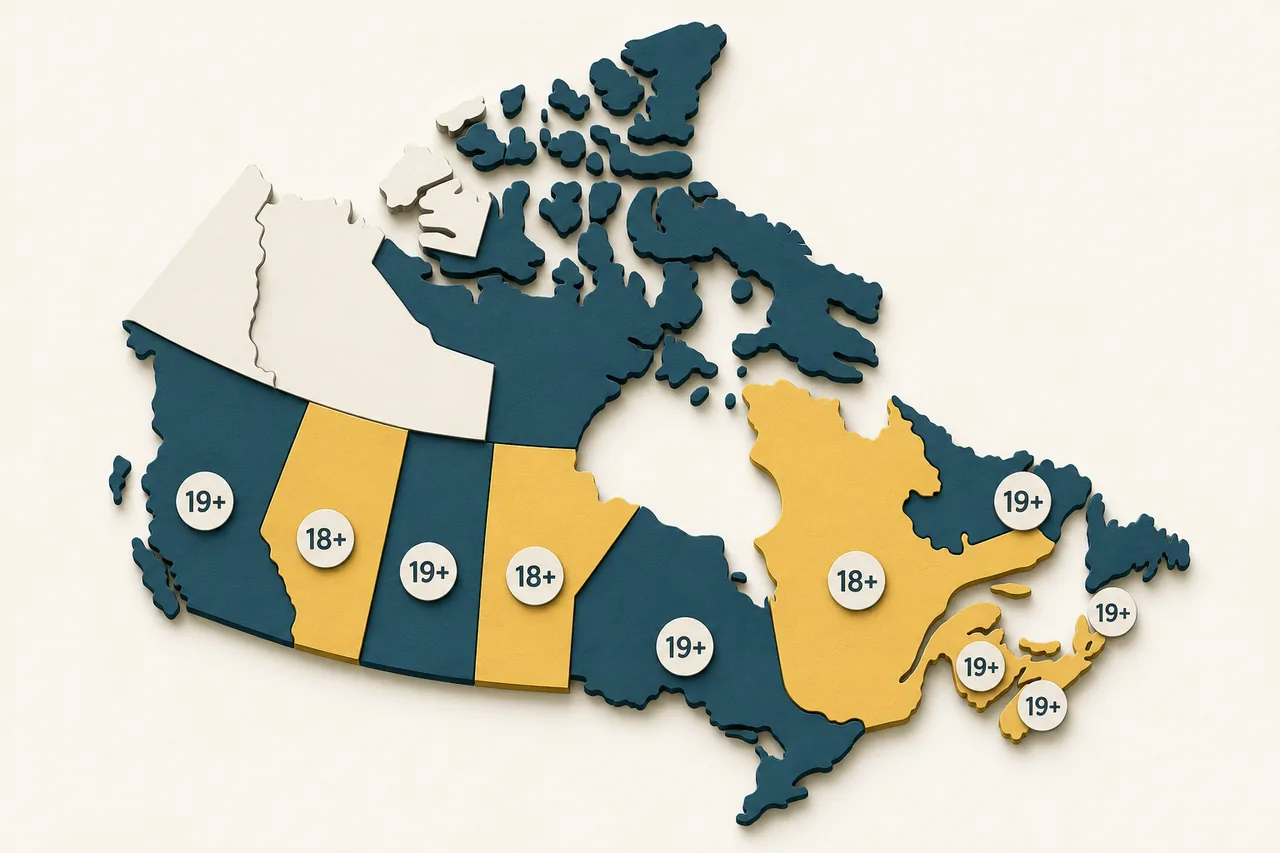
Canada has no single gambling age. Most provinces set the line at 19, while Alberta, Manitoba and Quebec allow play from 18.
The private markets add a location rule on top. Ontario’s licensed sites admit players who are at least 19 and inside Ontario, and Alberta’s licensed sites admit players who are at least 18 and inside Alberta. Atlantic Lottery products are for players aged 19 and up.
Good to know. Playing legally at 18 in Quebec does not carry over to Ontario. Once you sit down in Toronto, the Ontario minimum of 19 applies.
Your Winnings and the Tax Question
This is where Canadian players are often pleasantly surprised. In a February 2026 MoneySense piece, a tax specialist from H&R Block explained that lottery and gambling winnings for the average person in Canada are not usually taxed.
The Alberta iGaming Corporation makes the same point, stating that the Canada Revenue Agency does not tax recreational gaming winnings. For a longer read on the subject, the taxes-on-winnings guide at canada-gambling.com sets out the split between casual and professional play in more detail.
Where the Exception Lies
The picture changes when gambling is your job. If it is your main source of income, as with a professional poker player, winnings can be treated as business income and taxed.
The table shows how the common situations are generally treated.
| Situation | General treatment |
|---|---|
| Casual player wins at an online casino | Winnings are generally not taxed |
| Gambling is your main source of income | Winnings can count as taxable business income |
| A large one-off jackpot for a casual player | Generally treated like any other casual win |
Note. This is general information, not tax advice. If gambling makes up a large part of your income, speak with a tax professional.
Identity Checks Come Sooner Than You Think
Licensed sites need to know who you are before they pay you, and many ask at sign-up. A smooth check depends on everything lining up.
- Register with your full legal name, exactly as it appears on your ID.
- Use a bank account or card in that same name for deposits.
- Keep a clear photo of a valid ID ready, along with a recent document showing your address in case it is requested.
- Answer any follow-up questions promptly, since an open check can hold up your first withdrawal.
Matching names matter because payouts and disputes need a clear owner. A deposit from a partner’s card can cause delays that have nothing to do with the casino’s speed.
Where You Stand Decides Which Online Casinos Open
Online play feels borderless, but the rules are not. Provincial platforms serve players located in their own province, and the licensed private sites in Ontario and Alberta check that you are inside the province during play.
In Ontario, the quickest test is the iGaming Ontario mark on the site, which sits on top of an AGCO registration. In Alberta, approved private sites need an AGLC registration and an agreement with the Alberta iGaming Corporation.
Tip. Being able to open an account is not the same as being protected. Look for the approval of your own province before anything else.
Many sites licensed abroad will accept you from anywhere in the country. No province authorizes them, though, and provincial complaint routes and self-exclusion programs do not reach them.
Set Your Limits While You Register
Sign-up is the best moment to set limits, because you are calm and nothing is at stake yet. Ontario’s standards require licensed sites to offer money and time limits at registration, not only later in the account menu.
Choose a deposit limit that matches the budget from your checklist. Add a time limit too if late nights tend to run long, and leave both alone once they are set.
One Last Look Ahead of Funding the Account
Before you move any money, go back over the essentials one more time.
- Age and location rules for your province are met.
- Name, ID and payment method all match.
- The site is approved where you are.
- A budget is set, along with a deposit limit on the account.
- You know where to find help if you need it.
On that last point, people in Alberta can dial 211 to reach support services, including help for gambling concerns. Elsewhere, your provincial lottery body or health line can point you to local programs.
Get these basics right and joining takes minutes. Then the main benefit of playing as a casual Canadian player stays intact: what you win on a good night is generally yours to keep.